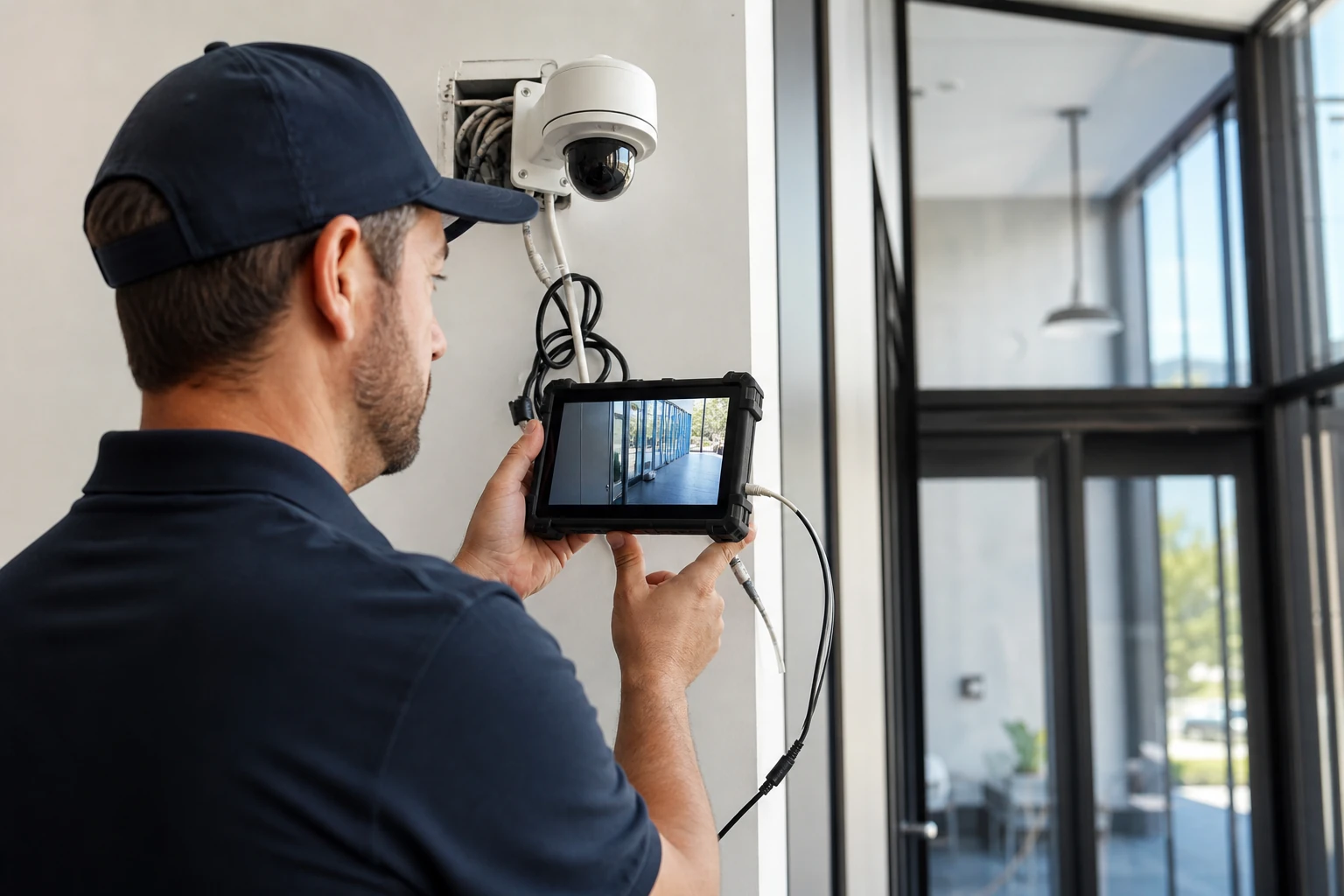
The useful answer is rarely “buy the biggest number.” This guide turns the specification sheet into an installation decision you can defend after dark, after handover and when footage is actually needed.
Preserve context and the native file
An export should include enough time before and after the event to establish context. Preserve the original native file when possible and create a widely playable copy for convenient review. Never edit the only copy or rely on a phone recording of a monitor.
Record time, method and custody
Record the camera name, exact time range, system time accuracy, export method and person who performed it. Use a cryptographic hash when chain of custody matters, store the original read-only and document every transfer. Local legal requirements determine the formal process.
Test playback before handover
Test playback on a separate computer before handing anything over. Include the vendor player only from a trusted source and scan removable media. Redact unrelated people only on a derivative copy, keeping the protected original unchanged.
Commission the system against a written evidence goal. Save reference images and settings so future maintenance can spot gradual changes.
Can another person prove the system still works?
Record the final view, night image, bitrate, alerts, firmware and access method. A system is not finished until the owner can verify recording and export without the installer standing beside it.
Every site is different. Confirm manufacturer instructions, electrical requirements, privacy obligations and local regulations before installation.
Frequently asked questions
What format should CCTV evidence be exported in?
Keep the native export where possible and also create a widely playable copy. Never overwrite or edit the only original.
How do you prove CCTV footage was not changed?
Preserve the original read-only, document every transfer and use a cryptographic hash where formal chain of custody is required.