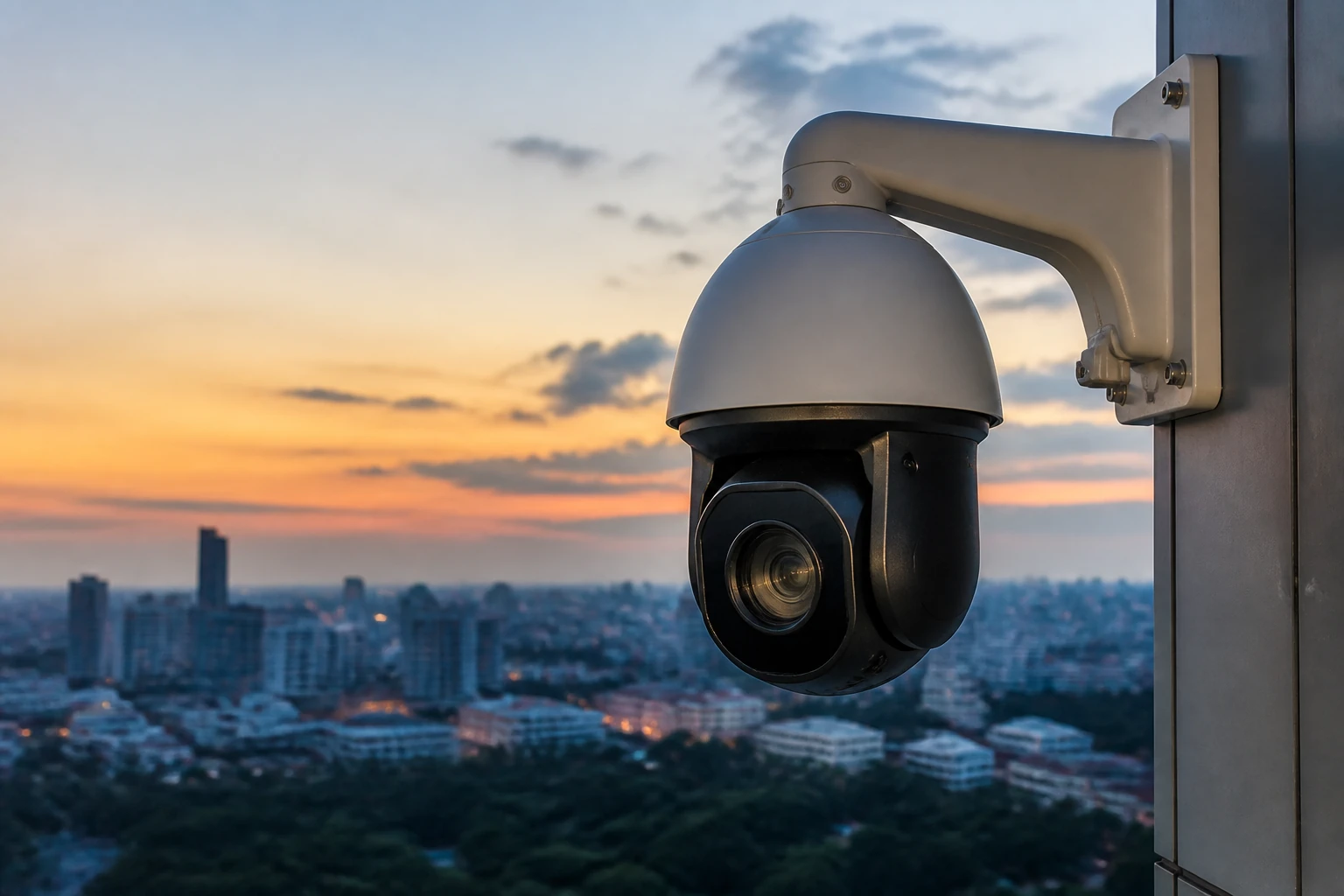
The useful answer is rarely “buy the biggest number.” This guide turns the specification sheet into an installation decision you can defend after dark, after handover and when footage is actually needed.
Protect must-record views first
A PTZ camera can inspect a large area in detail, but it records only the direction it faces at that moment. Preset tours create the appearance of total coverage while leaving every non-selected view temporarily blind. Fixed cameras provide continuous evidence and should cover critical paths first.
Use PTZ for directed detail
PTZ becomes valuable when an operator or reliable tracking system can direct it toward an active event. It also helps verify alarms across a yard or car park where installing a narrow camera for every possible detail would be impractical.
Design a dependable hybrid system
Budget for mounting rigidity, wind, maintenance and sufficient PoE power. Define a home position and privacy limits, then test tracking with real movement and occlusion. A hybrid design—fixed overview plus PTZ detail—usually produces the most defensible record.
Commission the system against a written evidence goal. Save reference images and settings so future maintenance can spot gradual changes.
Can another person prove the system still works?
Record the final view, night image, bitrate, alerts, firmware and access method. A system is not finished until the owner can verify recording and export without the installer standing beside it.
Every site is different. Confirm manufacturer instructions, electrical requirements, privacy obligations and local regulations before installation.
Frequently asked questions
Is a PTZ camera better than a fixed camera?
A PTZ offers movable detail but records only where it is pointing. Fixed cameras are better for continuous coverage of critical paths.
Can one PTZ replace several cameras?
Usually not for evidential coverage. A PTZ can inspect several areas, but unattended directions remain unrecorded unless fixed cameras cover them.