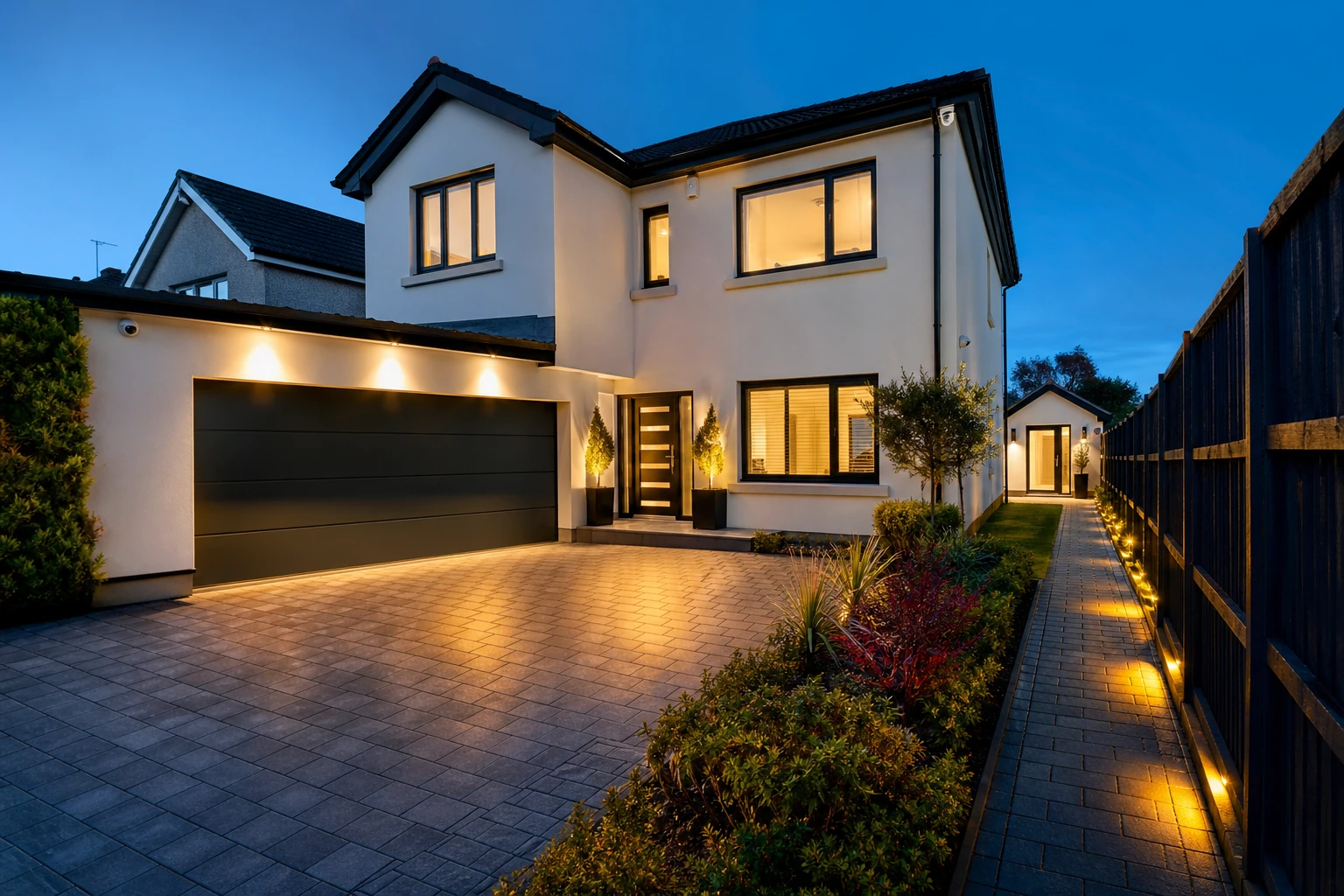
The useful answer is rarely “buy the biggest number.” This guide turns the specification sheet into an installation decision you can defend after dark, after handover and when footage is actually needed.
Give every wired camera one job
A wired home security camera system works best when every camera has a distinct job. Give the main entrance a face-level identification view, the driveway a narrower vehicle approach, side access a corridor view and the rear a broad boundary overview. Overlap the edges so a person cannot move between zones unseen.
Overlap paths without wasting pixels
Do not let the house lighting fight the cameras. Bright porch lamps behind a visitor can create silhouettes, while cameras under eaves can reflect their own infrared. Aim, expose and test each view at the times when it matters most.
Protect the recorder and alerts
Locate the recorder and network equipment away from obvious living areas, protect them with a small UPS and keep an encrypted configuration backup. Remote notifications should be limited to meaningful zones so residents do not disable alerts after a week of nuisance events.
Commission the system against a written evidence goal. Save reference images and settings so future maintenance can spot gradual changes.
Can another person prove the system still works?
Record the final view, night image, bitrate, alerts, firmware and access method. A system is not finished until the owner can verify recording and export without the installer standing beside it.
Every site is different. Confirm manufacturer instructions, electrical requirements, privacy obligations and local regulations before installation.
Frequently asked questions
Where should four home security cameras go?
A practical starting plan covers the main entrance, driveway, side access and rear boundary, adjusted for the actual movement paths and privacy constraints.
Is a wired home security camera system better than wireless?
Wired PoE systems usually provide a more stable network path and continuous NVR recording, while wireless systems can be easier to install. The building and recording goal decide which trade-off fits.